
0 Comments
About a week later, the young man came into the store. “Excuse me, sir,” Jose said as he greeted the man. “We were reviewing some of our security footage and saw you stuff a ribeye into your backpack and leave without paying for it. We thought that, rather than get the authorities involved, we’d ask you about it. So if you’ll just pay for it, we’ll be good.”
The young man, unfazed, replied, “Well, I ate the ribeye and it’s gone, so why should I pay for it?” He abruptly left the store. Jose just stood there, at a loss for words at the twisted logic.
*** *** ***
You may be looking at this scenario wondering how the young man could possibly feel that he shouldn’t pay for the ribeye just because it no longer exists. He brought it home, prepared it, and enjoyed it. Jose and Linda lost money because of the young man’s actions. And to add insult to injury, the young man felt absolutely no remorse for stealing the ribeye. Sounds crazy, huh?
Yet, it’s precisely this logic, the ribeye alibi, people have used when I’ve caught them plagiarizing my articles. Dictionary.com defines plagiarism as “an act or instance of using or closely imitating the language and thoughts of another author without authorization and the representation of that author's work as one's own, as by not crediting the original author.” According to Grammarly.com, there are seven common types of plagiarism:
I wrote my first book, The Project Management Advisor, in 2004. Since then, I have written more than 50 books and more than 400 articles. Periodically, I run my articles through a plagiarism checker to see where else they show up and if I have been given proper attribution. Many times, someone will repost one of my articles and give me proper attribution. Provided proper attribution is given, I am completely cool with my article being reposted. But there are times when someone will either completely plagiarize my content or paraphrase it with no attribution whatsoever. Finding plagiarized content is one thing; getting action is a horse of a different color. I’ve experienced everything from having the content removed by the platform, to being reimbursed by the plagiarist, to having the plagiarist make a donation to my favorite charity, to being ignored, to hearing the ribeye alibi. Two instances of the ribeye alibi went as follows:
From a legal perspective, they worked, at least in their own interpretation, within the boundaries of the law. From an ethical perspective, they abandoned any sense of doing the right thing by claiming the ribeye alibi. They posted my content under their name (the shoplifter stole the ribeye), enjoyed the use of my content (the shoplifter ate the ribeye), then when they were caught (the shoplifter was recorded stealing the ribeye on camera), they claimed that because they took it down they weren’t required to do anything else (the shoplifter said he wasn’t in the wrong because the ribeye no longer existed). In this analogy, most rational-thinking people would say the owners of the grocery store deserve to be compensated for the stolen ribeye. So why shouldn’t I as the victim of plagiarism deserve to be compensated for the unauthorized and improperly cited use of my content? My intent is to dig deeper into the ribeye alibi and give you some practical nuggets on how to discover if you’ve been plagiarized and how to address plagiarism matters. I will also tell you five real-life stories about my being a victim of plagiarism. I will not be divulging entity names; they will only be known as RibCo, RightThingCo, Coward, RibGuy, and SorryDude. My experience and focus are on articles, blog posts, and other written content available on the Internet; I am not focused on other digital assets like music and pictures. Also, please keep in mind that I am presenting this from a business and ethical perspective and giving you some ideas to consider. You should consult with an intellectual property attorney before taking action on your own. See more about RibCo, RightThingCo, Coward, RibGuy, and SorryDude, and how you can fight plagiarism in The Ribeye Alibi: What I Learned as a Victim of Plagiarism.  It was one of my earlier projects as a project manager.
I spent a lot of time planning the work out, calculating the critical path through the project, and getting everything ticked and tied prior to kickoff. The kickoff meeting went well with the exec sponsors. I set high expectations on my ability to deliver. The team was largely silent during the kickoff meeting, letting me do my thing. The first few weeks in, I reported that we were on schedule and budget, and within scope; we were on our way to a stellar delivery. At week four, a few of the tasks started slipping. “No problem, we can make it up,” I thought to myself. I reported that we were still on schedule. The next few weeks saw more slippage, and some team members began expressing concern about our ability to meet dates. I reported that things were still okay, and we were working through a couple of minor issues. After a couple more weeks, the concerns continued to crescendo, and one of the exec sponsors caught wind that there might be some problems on the project. He set up a meeting with me and some of my leads to deep-dive on what was going on. It was one of my most uncomfortable meetings at that point in my young career. I was the last one in the room to acknowledge there were problems. Read more at ProjectManagement.com. 
Several years back I conceived and funded a small business. My partner and I were very excited about the concept and had sky-high aspirations about the prospects of the business. While the idea was great, I ultimately decided to shut the business down as I felt the cost of keeping the business afloat would continue to outstrip the revenue. I'm not going to bore you with the details of the business; what I do want to do is talk with you about the decision process I went through and how the "morning after" decision making process tipped the scales for me.
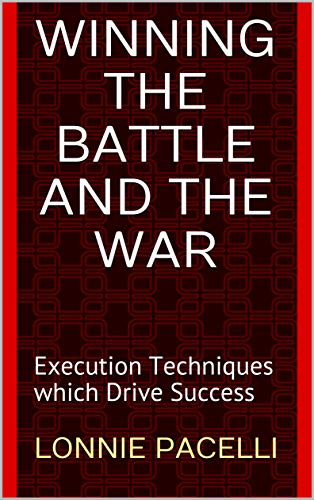
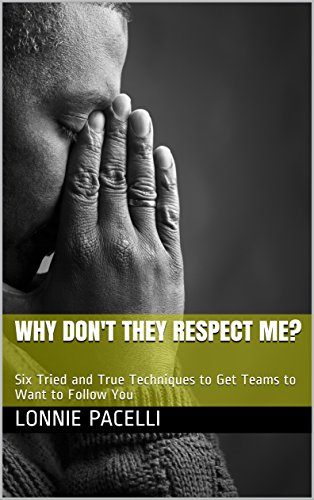
 Since my first book in 2004, I have written more than 50 books and 400 articles on topics such as project management, leadership development, work/life balance, and raising a child on the autism spectrum.
My earlier attempts at writing articles were a jumbled mess and required hours of refining thoughts after my editor had given me constructive feedback. I’ve spent a lot of time figuring out how to write both more effectively and efficiently. If you’re interested in writing articles, my singular goal is to help you produce topical content that’s relevant, helpful and entertaining for your readers. Read more at ProjectManagement.com.
 A long-time friend (who I’ll call “Stu”) loves talking about finances. Stu is very active in the stock market and spends hours researching exchange traded funds. He is also very big on maximizing rewards points and signing bonuses with credit cards. Stu is not at all in debt (that I know of); he is just really big on accumulating wealth.
Admittedly, I share some of Stu’s zeal. I too am active in the stock market and use credit cards for specific purposes to maximize cash-back rewards. Aside from saving money, it’s a fun game to see the great deals I can get. Where Stu and I differ, though, is in what we are willing to sacrifice for our wealth accumulation journey. I enjoy comfort and convenience, and value my personal time and generally will not sacrifice much in those areas to save a dollar. I believe in sound fiscal management, but not at the expense of comfort, convenience, or impacts to my time. Stu, on the other hand, is much more willing to sacrifice comfort, convenience, or personal time if it means more money in his pocket. It’s needled at me for years, particularly when Stu tries to project his values about finances on others and criticize those who are less willing to make the sacrifices he makes. In a recent discussion, I confronted him on his views on finances. Needless to say, the discussion didn’t go particularly well. I can also say I was wrong in confronting him. Read more at ProjectManagment.com.  This is an article my son Trevor wrote for the Seattle Childrens Autism Center blog:
Being autistic, I have always been a very blunt person. Back when I was a kid, I often blurted out straightforward, even disrespectful comments when meeting others, such as, "Hello, shorty!" or, "Whoa, she’s so fat!" This problem was at its worst in high school when I got the idea that making dumb jokes at others’ expense would get me noticed more. I needed to be taught over time how to think before I speak, and now I have better control over my inappropriate outbursts. Read more at SeattleChildrens.org.  I remember my first position as a manager, selling clothes in a department store to work my way through college. One of my colleagues, who I’ll call Jay, was also a good friend. We ran together, went to movies, and overall had a great time.
After I got promoted and became his boss, we still did some things together—but there was persistent tension in our relationship. He didn’t like the fact that I was his boss and would tell me that he worked for my boss, not me. He then became chummy with another guy who was his peer in another department. This tension existed until I graduated from college and left the department store. Once I wasn’t his boss, the tension lifted. That was my first experience with the “them” team. Read more at ProjectManagement.com. 
My name is Lonnie, and I'm a victim of identity theft.
So check this out. A buddy of mine wrote a Facebook post about how someone stole his daughter's Social Security number and filed for unemployment benefits with Washington State's Employment Security Division (ESD). Having never occurred to me, I decided to go to ESD and attempt to file an unemployment claim. After I entered the information I received the following message: The Social Security number (SSN) you entered already exists and is linked to this partly hidden email address: *****@fasternet.co |
Topics
All
Reprints
Contact Lonnie about article reprints. Please specify article you wish to reprint. Backlist
See Lonnie's Amazon Author Page Archives
July 2024
|
 RSS Feed