
0 Comments
Friday looked to be like any other day.
I got up, had breakfast, and left the house around 8:30 for a day of meetings. We had planned on having another couple over for dinner that night and a day trip with our son on Saturday. About noon, Patty called me saying she had a pain in her abdomen since getting up and it was getting worse. I asked her if she wanted me to come home. She told me she didn’t need me home, but that we should probably cancel dinner in the event she had something contagious. I was out for a few more hours and came home to her sitting on the couch, saying the pain wasn’t going away. Her temperature was 101. We talked to a tele nurse who suggested it might be an infection and that we should go to urgent care. After a short wait we got checked in. The pain continued on, now accompanied by nausea. They ran blood tests then, after seeing the results, decided to do a computed tomography (CT) scan of her abdomen. What did the blood tests reveal? Why the CT scan? What were they looking for? What’s going on? These questions raced through my mind as they took Patty away for the scan. About ten minutes later she came back, where we sat and waited for about two hours; Patty’s pain stubbornly persistent along with the nausea. Then the doctor came in.
Recently I wrote an article about creating a sustained lifestyle. In the article I introduced a concept which contrasts achievement (doing something meaningful that accomplishes a desired result which gives you joy) and stress (the degree of mental, physical, or emotional strain undertaken to achieve a desired result). In the model I define four different lifestyles driven by achievements and stress, as follows:
In 2004, I left Microsoft so Patty and I could homeschool our son Trevor. He was diagnosed with Autism Spectrum Disorder at age five, and we decided as he was entering seventh grade that he would need more help than what his public school could offer. I was his math and science teacher for two years until he re-entered public school in ninth grade. After my homeschooling stint, I decided to focus on writing and consulting, and later Patty and I starting a publishing business. From that point until now, I have regularly been asked if I’m “retired.” At first, I would respond with a strong “no” due to my opinion that retirees spend their days on the golf course or playing bridge. Over time, though, I recognized I had to come up with a better description of what I do as a profession. It’s not a choice of either the golf course or the 8-to-5 grind. For me, it’s something I call sustained lifestyle.
So, what’s sustained lifestyle? Here’s the definition, then we’ll unpack it: 
This one is a bit of a departure from my typical article topics.
Recently I wrote a book about what I call “good-enough contentment.” It’s an allegory about a forty-something man who is unhappy with his life. After a magical train ride, he learns to define what contentment means in nine areas of his life: career, family, health, friendships, finances, leisure, spirituality, giving, and legacy. Writing the story caused me to look back at my own life--the things I did well and the many mistakes I made. It inspired me to write about nine nuggets that I wish I could go back in time to tell my younger self. Some I would have done the same all over again, others radically different. All, however, are worth putting down in writing to spur your thinking about things you need to start, stop, or continue. Here they are: 
In 2004, my wife Patty and I decided to team homeschool our autistic son because we knew he would need more help as he entered middle school. I had spent 20 years in corporate America, working for both Accenture and Microsoft, but in the Fall of 2004, I became his part-time math and science teacher, spending the remainder of my time doing business consulting and writing books.
Up to that time I always had either a client or office to go to. With the change to homeschool teacher/author/consultant, I now had no place to go each day. My office was either our playroom where we homeschooled, our home office, or local coffee shops. It was definitely an adjustment and I learned a lot about how to be effective without going to a workplace. Now I can’t imagine it any other way. Make Better Life Decisions Using the Nine Crucial Elements to Achieve Good-Enough Contentment12/29/2020 
In Behind Gold Doors-Nine Crucial Elements to Achieve Good-Enough Contentment I discuss how to achieve what I term "good-enough" contentment in your life. The book is a story about Ty, who seemed to have it all, then one day it all changed. At the end of his rope, Ty had a chance encounter with a quirky old woman who brought him on a journey to discover the nine crucial elements of good-enough contentment and helped him put a plan in place to fill his contentment gaps. His outlook on life changed forever as a result of him thinking through each of the contentment areas, re-aligning his expectations to think in terms of good-enough, and creating a prioritized plan to work towards good-enough contentment. If you haven't read the book yet I recommend you pick it up :-).
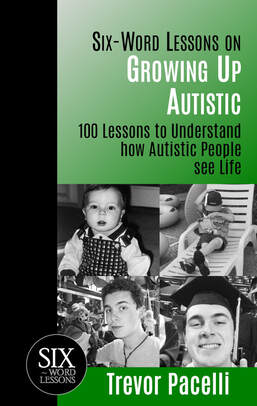
Typically, career choices are made based upon responsibilities, compensation, or prestige where a businessperson makes a change to get a higher salary, more responsibility, or greater prestige. What about the situation, though, where the driver behind a career choice isn’t any of these; where it’s the needs of a child that drive the change? My choice was precisely that.
Trevor was a happy, normal, active baby. He was able to laugh, coo, cry, and do all of the other normal things that his big sister, Briana did at that age. To my wife Patty and me, everything seemed to be just fine. At about age two, we noticed that Trevor was hardly saying any words and was very into his own world with puzzles, coloring, and videos. |
Topics
All
Reprints
Contact Lonnie about article reprints. Please specify article you wish to reprint. Backlist
See Lonnie's Amazon Author Page Archives
April 2024
|

 RSS Feed